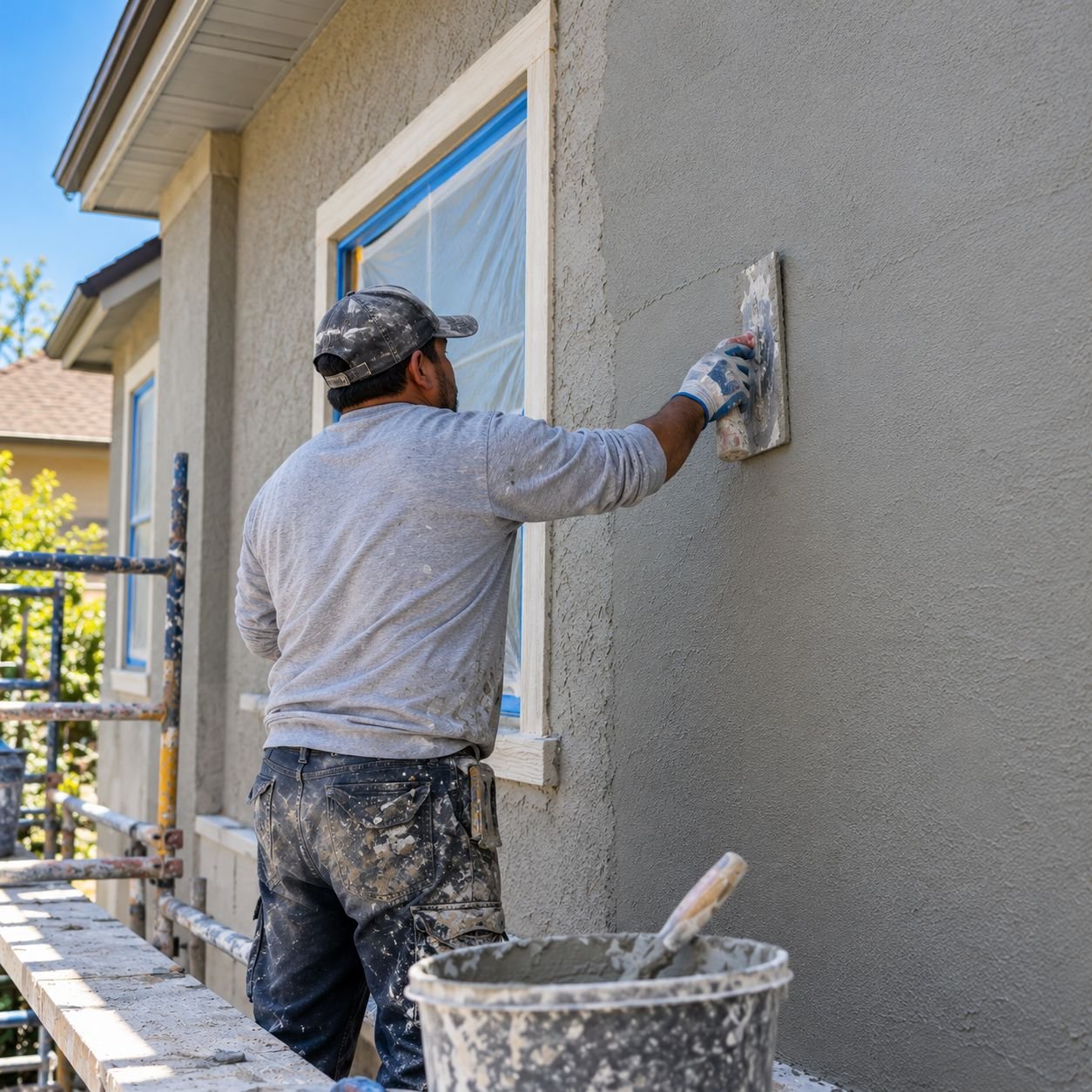
Stucco is a great exterior material that makes the appearance of your house beautiful while safeguarding the walls from harsh external elements. However, factors like rain, temperature, humidity, and even wear and tear can take a toll on stucco over time.
Hiring professional stucco repair services can help you assess the exterior walls of your house and know whether anything needs to be done or not. Here are seven signs that you should consider.
7 Warning Signs Your Stucco Needs Professional Repair
- 1. Cracks in the Stucco Walls: Hairline cracks might be normal since building materials contract and expand. Widening or recurring cracks in areas such as doors, windows, and wall joints might be a sign of either movement or moisture.
- 2. Water Stains or Discoloration: Presence of brown stains or any other kind of discoloration might signify water penetration that could happen because of damaged sealants, leaky gutters, or cracks. Painting without solving the moisture problem will only serve to conceal it for some time.
- 3. Peeling or Bubbling Paint: Peeling paint, blisters, or paint bubbling up might be signs of presence of moisture or insufficient surface preparation or even wrong coatings. Prior to painting, one needs to make sure that the stucco surface is dry.
- 4. Bulging or Loose Stucco: Swelling, bulging or loosened stucco might be a sign of water damage. The professional contractor will analyze the area to determine whether localized repairs are needed or the whole section should be replaced.
- 5. Dark Patches or Mold-Like Growth: Dark patches or green growth may appear on walls exposed to persistent moisture due to poor drainage or leaking gutters. Recurring dampness should be investigated, especially when accompanied by cracks or peeling paint.
- 6. Crumbling or Powdery Stucco: Stucco that flakes, crumbles, or produces powder when touched may have deteriorated due to moisture or weather exposure. Proper surface preparation and suitable repair materials are necessary to restore the damaged area effectively.
- 7. Interior Dampness Near Exterior Walls: Water stains, peeling interior paint, or damp patches near exterior walls may indicate moisture entering through damaged stucco, window seals, or roof connections. An inspection can help identify the source and determine the appropriate repair.
How to Choose the Right Stucco Repair Service
When these warning signs appear, arrange a professional inspection to assess the damage and identify potential moisture problems. Stucco Repair Long Island services may include crack repairs, surface restoration, and replacement of damaged sections.
Choosing the best service is best determined by asking the contractor what materials and methods they will use to make the repair. The contractor should also address the cause of the problem. In Brooklyn, property owners should also look for services that will address their exterior wall needs.
Conclusion
Cracks, water stains, loose areas, peeling paint, and consistent dampness may be signs that stucco repair is required. Knowing these issues will help property owners determine the source of the issue and the right repair method.
If you have noticed these warning signs, consider getting a professional assessment of the state of your exterior walls. Seek out the assistance of a provider of Stucco Repair Long Island services to help you with this issue.
Frequently Asked Questions
-
1. How do I know if my stucco needs repair?
Cracking, moisture stains, paint chipping, loose sections, and crumbling surfaces are common signs. An inspection by a professional can help determine the problem.
-
2. Can small stucco cracks cause water damage?
Yes. Small cracks allow water to seep into the wall system, especially those located near windows, doors, and compromised joints.
-
3. Does damaged stucco always need replacement?
No. Minor, localized damage may be repaired without replacing the entire surface. The right approach depends on the extent of deterioration.
-
4. Can moisture remain hidden behind stucco?
Yes. Water can enter through cracks or failed seals and affect underlying materials without immediately producing visible interior damage.