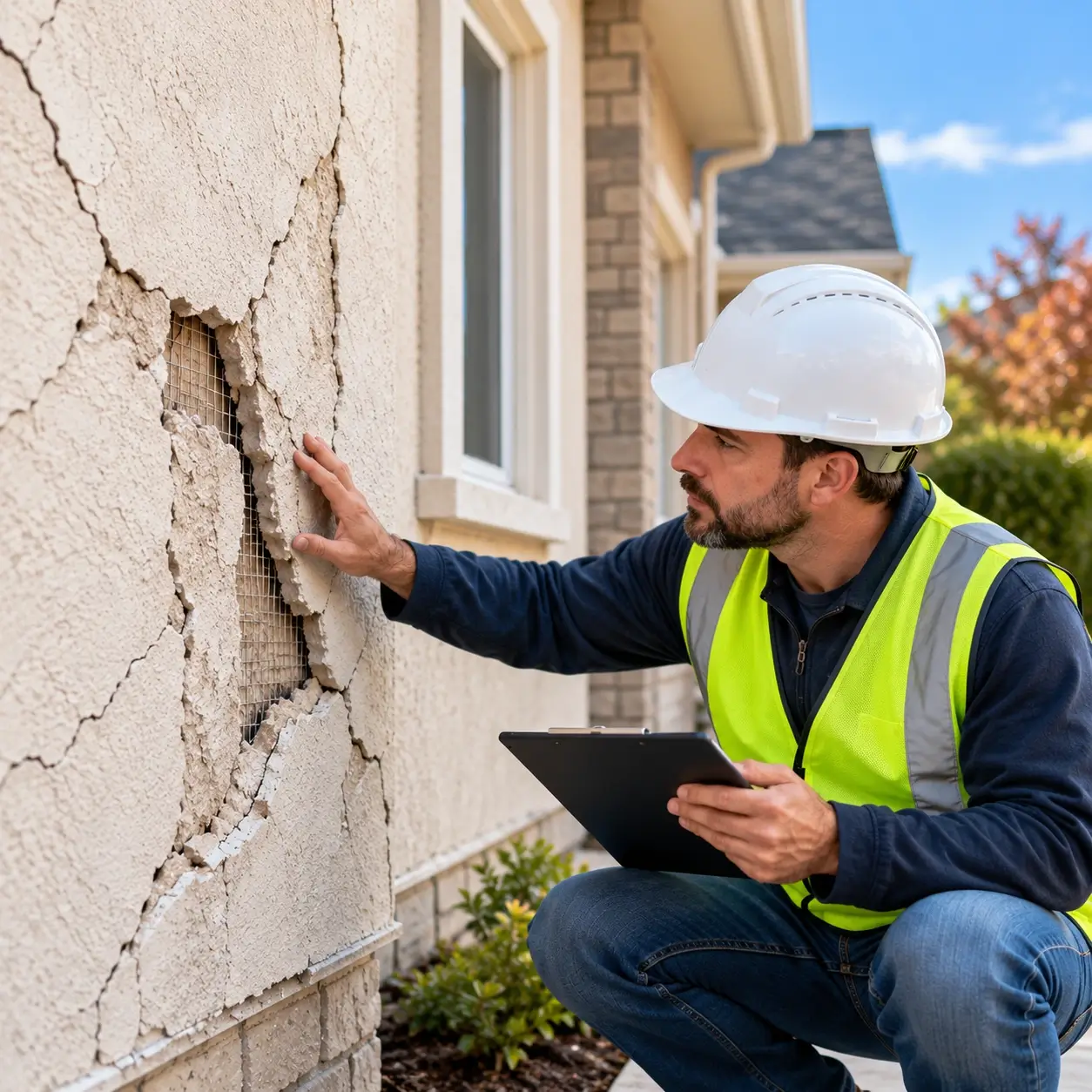
Stucco damage can be caused by rapid moisture accumulation, sudden impacts, heavy winds, or even soggy soils. Any of these can damage a wall. If you choose to ignore the damage, cracks can continue to widen, sections of the wall can separate, and water can begin to permeate the wall system and rot the sheathing.
Emergency Stucco Restoration Queens helps identify the cause of the damage and suggests the appropriate solution. Learning the signs of damage may help property owners take the necessary precautionary measures.
When Does Stucco Damage Become an Emergency?
A hairline crack is not necessarily a crisis, but when damage is compromising the safety of the building or allowing water to enter the space, a crisis is present. A safety assessment is necessary to identify the extent of the problem.
Warning Signs That Require Immediate Attention
Queens property owners should arrange an inspection when they notice any of the following conditions.
- 1. Bulging or Detached Stucco: Bulging areas may indicate that the stucco has separated from the supporting surface. Loose sections can continue to weaken and may eventually fall. Avoid touching or removing them without professional guidance, especially when the damage is above entrances or walkways.
- 2. Large or Spreading Cracks: Large cracks or cracks that continue to expand can also indicate damage to the stucco system, due to movement, impact, or failure. Cracks are just as dangerous as a visible opening and should not be hidden by a paint or filler job.
- 3. Water Stains and Interior Dampness: Moisture intrusion can cause stains, soft spots, and peeling paint where an exterior wall meets an interior surface. An emergency inspection is needed after a heavy rainfall, because moisture may have gotten behind and be hidden by the surface.
- 4. Storm or Impact Damage: Stucco can be damaged by wind-blown debris, falling branches, and impacts. Emergency Stucco Restoration Queens can be called for emergency service to secure the area and help contain the exposure.
The Emergency Stucco Restoration Process
The correct repair method depends on the type of stucco, extent of damage, and condition of the underlying wall.
- Initial Inspection and Safety Assessment: The contractor first examines the damaged surface, nearby walls, openings, and possible moisture-entry points. Unsafe or loose material may need to be isolated before restoration begins.
- Removal and Surface Preparation: Damaged stucco is removed to allow the repair. The work surface must be cleaned and prepared prior to application of the stucco repair material. Any record of moisture must be addressed prior to the application of a patch.
- Repair and Finish Matching: The new stucco is applied in layers, and the contractors attempt to match the existing color and finish. For synthetic stucco systems, specialty EIFS repair stucco systems are required to repair the finish and system.
- Sealing and Final Inspection: Once the repair has cured, suitable coating or sealing may be applied where required. A final inspection confirms that the repaired area is secure and properly finished.
Professional Stucco Repair Solutions in Queens
Stucco Repair NYC provides inspection, repair, restoration, and replacement solutions for damaged stucco exteriors. The team evaluates each property before recommending patch repair, crack treatment, EIFS restoration, or broader replacement work.
Conclusion
Timely Emergency Stucco Restoration Queens services can help control damage caused by loose surfaces, widening cracks, moisture, storms, or impact. Contact Stucco Repair NYC to arrange an inspection and determine the appropriate repair solution for your property.